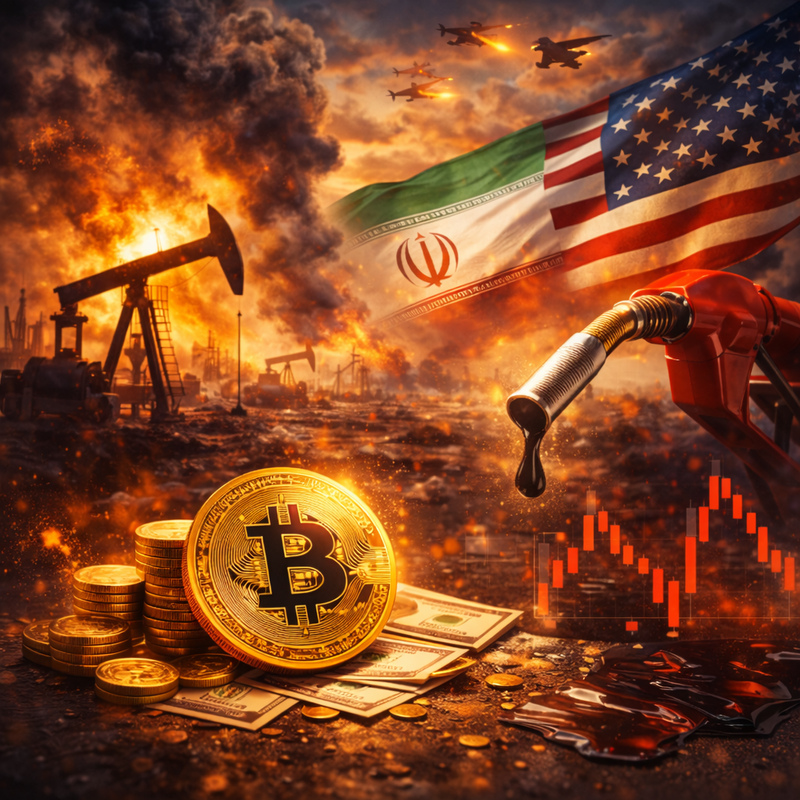
 ▲ Iran, United States, Bitcoin (BTC) / ChatGPT-generated image |
As geopolitical tensions in the Middle East escalate and oil prices surge, forecasts suggest that U.S. inflation could climb as high as 5%. At the same time, tension in the Bitcoin (BTC) market is reaching a peak.
According to a March 2 report by a cryptocurrency-focused outlet, concerns over potential military conflict involving Iran have driven international oil prices sharply higher, increasing macroeconomic uncertainty. As rising energy costs stimulate overall price levels, warnings are growing that U.S. inflation could return to the 5% range. Bitcoin investors are closely monitoring developments, caught between risk-off sentiment and Bitcoin’s perceived value as an inflation hedge.
Market analysts note that if elevated oil prices persist, expectations for interest rate cuts by the Federal Reserve could diminish. Inflationary pressure triggered by higher oil prices may ultimately lead to tighter liquidity conditions, putting downward pressure on risk assets such as Bitcoin. In particular, whenever the possibility of retaliatory action by Iran is mentioned, Bitcoin prices have reacted sensitively, increasing volatility.
Some traders believe the current situation could serve as a test of Bitcoin’s status as digital gold. In past geopolitical crises, Bitcoin has at times demonstrated characteristics of a safe-haven asset and rebounded. However, others urge caution, arguing that the magnitude of the macroeconomic shock—underscored by projections of 5% inflation—makes a similar rebound less certain this time.
Oil price volatility stemming from Iran’s military movements has emerged as a key variable directly influencing Bitcoin’s price trajectory. Market participants remain divided on whether Bitcoin can maintain its safe-haven status amid geopolitical turmoil. The digital asset market is currently experiencing heightened volatility in response to shifting external factors.
Disclaimer: This article is for investment reference only and we are not responsible for any investment losses arising from its use. The content should be interpreted for informational purposes only.