 |
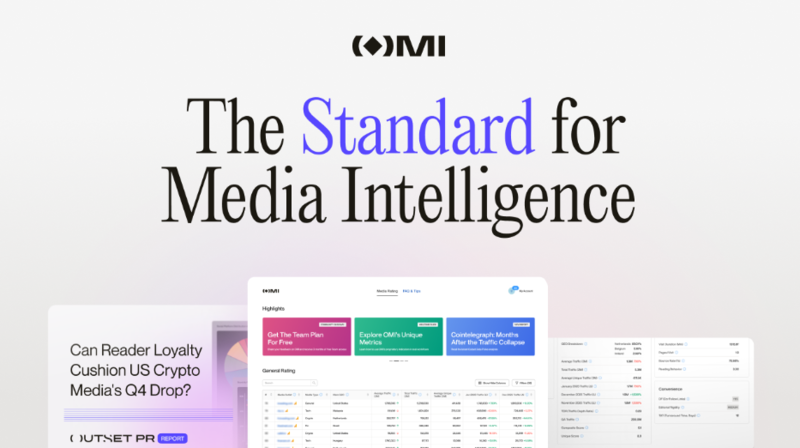
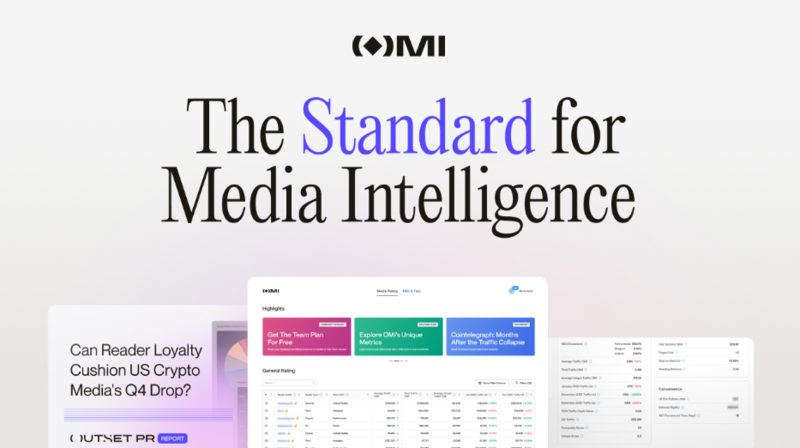
The Outset Media Index (OMI), which aims to establish a data-driven standard for media analysis, officially launched with a soft opening on March 12. OMI provides an index system that evaluates media performance by analyzing data from more than 340 outlets covering cryptocurrency across the crypto, finance, technology, and general news sectors.
OMI was developed to address the limitations of traditional media analysis, which has often relied on fragmented traffic metrics or limited visibility data. The platform evaluates outlets using a total of 37 performance and operational indicators across four areas: reach, engagement, content distribution structure, and collaboration environment. The data is based on partner sources such as Similarweb and Moz, combined with proprietary research metrics to analyze traffic and SEO data within more practical and contextual frameworks.
All indicators undergo a standardized review and normalization process before application and are designed to eliminate inflated figures that could skew results in favor of specific outlets. OMI noted that existing media lists have often used opaque methodologies to determine rankings, explaining that OMI aims to provide an objective analytical infrastructure through data-driven evaluation.
The emergence of such a platform comes amid rapidly changing media traffic dynamics. According to a Chartbeat report cited by the Reuters Institute, global news websites experienced an approximately 33% decline in Google search referral traffic between November 2024 and November 2025. Furthermore, as AI summaries and conversational search features expand, referral traffic to news sites is projected to decline by an additional 43% over the next three years.
In this environment, it is becoming increasingly difficult to assess a media outlet’s true influence based solely on traffic figures or search rankings. Industry observers point out the need to consider multiple factors, such as whether traffic spikes are temporary, how sustainable reader engagement is, and how widely article content spreads across other platforms.
To address these challenges, OMI has introduced several proprietary analytical metrics. For example, the Unique Score tracks stable unique readership over a set period to distinguish between temporary traffic surges and a long-term reader base. The Reading Behavior metric measures actual audience engagement by analyzing page dwell time, pages per visit, and bounce rates. The Reprints indicator evaluates how frequently content is republished across other media outlets and news aggregation platforms to assess the structure of content distribution.
These indicators are consolidated into two comprehensive evaluation systems. The General Rating reflects overall media performance, while the Convenience Rating assesses operational factors that influence real-world media collaboration, such as collaboration efficiency, editorial responsiveness, and cost-to-reach effectiveness.
The platform allows users to compare or filter outlets according to various criteria and provides detailed profiles and historical data for each outlet. It is designed to support advertisers, media buyers, PR professionals, marketing teams, and researchers in conducting media analysis and shaping budget allocation strategies.
During the current soft launch phase, the platform operates under limited access, focusing on refining metrics and features based on feedback from real-world usage. Early participants will receive separate recognition and rewards for their contributions to improving the platform.
OMI is part of the analytics ecosystem built by PR and media analysis firm Outset PR. Within this structure, OMI provides media performance data, while the research and analytics platform Outset Data Pulse (ODP) serves as a research layer that interprets the causes and implications behind changes in that data.
Sofia Belotskaia, Product Lead at OMI, stated, “Data alone lacks meaning without a comparable structure,” adding, “While OMI shows media performance and content distribution patterns, ODP explains why those changes occurred.”
Mike Ermolaev, Founder of Outset PR, said, “Media activity is fundamentally a human creative endeavor, but it also requires a clear data-tracking and analytics infrastructure,” adding, “Visibility is not a matter of luck but a system that can be managed through measurement and design.”
Outset PR plans to further integrate analytical tools such as OMI and ODP throughout 2026 to build an operational environment where media data can be more easily utilized.
Disclaimer: This article is a press release provided by the company.