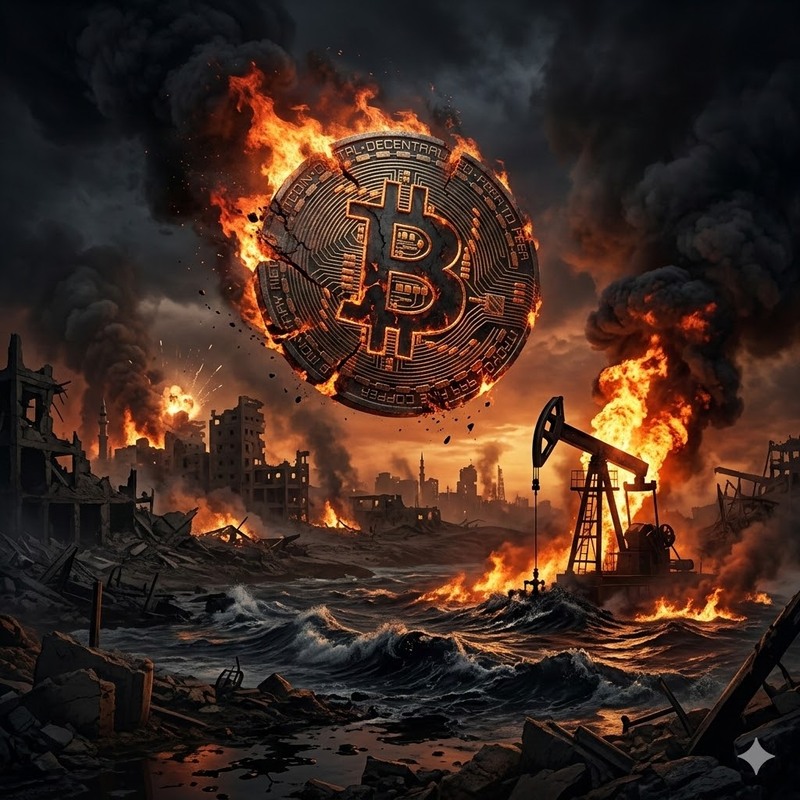
 ▲ Bitcoin (BTC), Iran war, crude oil / AI-generated image |
A geopolitical crisis originating in the Middle East is engulfing global financial markets, turning fears of a black swan event—marked by a surge in oil prices and a sharp stock market crash—into reality.
In a video uploaded on March 13 (local time), Paul Barron, co-host of the cryptocurrency-focused YouTube channel Paul Barron Network, analyzed that the attack on an oil tanker in the Strait of Hormuz and Iran’s threats against financial institutions are paralyzing both the real economy and the digital asset market. Citing a forecast from Goldman Sachs, Barron presented a bleak outlook that if the conflict continues through April, international oil prices could approach $150 per barrel.
U.S. President Donald Trump has downplayed the recent military operations as a brief excursion akin to a picnic, but the reality on the ground is stained with massive war costs reaching $1 billion per day and significant casualties. Concerns are growing that gasoline prices, which directly affect household finances, could soar to $8 per gallon, fueling criticism even within Trump’s support base. Rising energy costs are expected to push fertilizer prices up by more than $100 per ton, signaling a potential domino effect of farm bankruptcies and surging food prices.
Fear in the stock market is becoming more tangible, with increasing analysis suggesting the S&P 500 could undergo a correction of around 20% from its peak. An exodus of approximately $26 billion from private credit funds managed by major firms such as BlackRock and Blackstone has been observed, deepening concerns over a liquidity crisis. Amid turmoil in traditional finance, the likelihood of the U.S. cryptocurrency market structure bill (CLARITY) passing has fallen from 60% to 54%, reviving regulatory uncertainty.
In the digital asset market, Bitcoin (BTC) and gold have stagnated around the $70,000 level, struggling to find clear rebound momentum, while the market’s Fear and Greed Index has dropped to 28 points. Despite the downturn, BlackRock has launched an Ethereum (ETH) staking ETF linked to its spot Ethereum ETF in an attempt to drive asset rotation, but the market response has been lukewarm. Meanwhile, tensions between traditional banks and the crypto industry have escalated to a peak as investors filed a lawsuit against JP Morgan over alleged involvement in a $328 million crypto Ponzi scheme.
The global economy now stands at the brink of an unprecedented crisis involving demand destruction and hyperinflation, depending on whether the Strait of Hormuz is closed. Paul Barron assessed that the current market environment represents the beginning of structural fractures rather than a simple correction, predicting prolonged extreme confusion among investors. As liquidity strains in traditional financial markets increasingly spill over into the digital asset sector, risk management has become more critical than ever.
Disclaimer: This article is for investment reference only and we are not responsible for any investment losses arising from it. The content should be interpreted for informational purposes only.