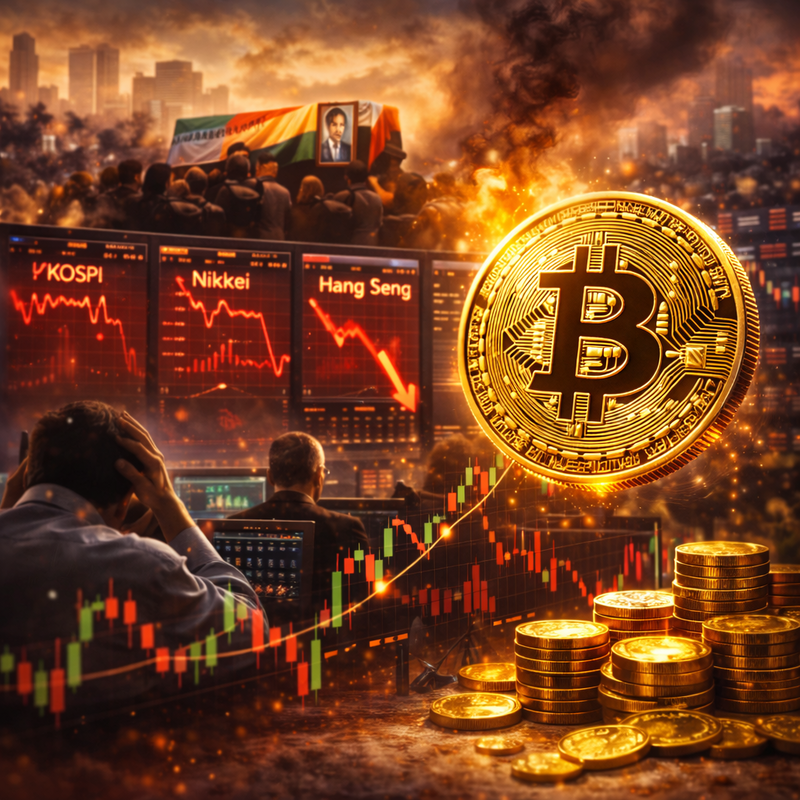
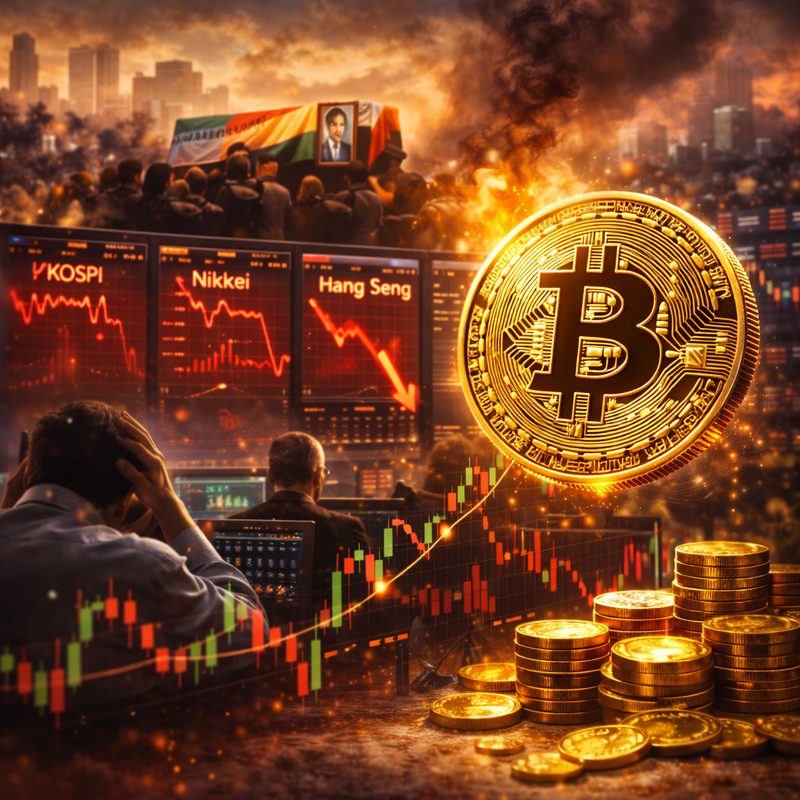
 ▲ Iran, Bitcoin (BTC), Stock Market/ChatGPT-generated image © |
As geopolitical tensions surrounding Iran escalate and roil global financial markets, analysts say Bitcoin (BTC) is solidifying its position not merely as a risk asset but as a genuine safe haven, drawing keen attention from investors.
According to cryptocurrency media outlet Jinse Finance on March 6 (local time), the deepening crisis around the Strait of Hormuz—through which roughly 21% of global oil trade passes—has sent oil prices soaring and delivered a major shock to traditional markets. However, unlike past weekend macro shocks when Bitcoin absorbed heavy selling pressure, the cryptocurrency demonstrated unusual resilience during this crisis, fending off panic selling and attracting substantial capital inflows.
This distinct resilience is attributed to the market having already undergone an intense structural correction. Over the previous five months, whale investors cashing out approximately $30 billion drove prices to a bottom, compressing the Market Value to Realized Value (MVRV) ratio below intrinsic value. The Relative Strength Index (RSI) plunged to 16, signaling extreme oversold conditions, while the leverage ratio fell from 33% in October 2025 to 25%, flushing out speculative positions and strengthening the market’s capacity to absorb external shocks.
Actual capital flow data supports this positive shift. After five consecutive weeks of outflows totaling $4.3 billion from the exchange-traded fund (ETF) market, $1 billion in net inflows was recorded last week alone, followed by an additional $500 million pouring in on Monday immediately after the weekend when geopolitical tensions peaked. Meanwhile, although the U.S. Producer Price Index (PPI) significantly exceeded market expectations, dampening hopes for rate cuts, Bitcoin’s non-sovereign scarcity has stood out more prominently amid energy-driven inflationary pressures.
Experts predict that if the crisis in the Strait of Hormuz becomes prolonged, Bitcoin’s structural advantages could translate from theory into practical strength. Just as Russia’s central bank once saw $300 billion in reserves frozen, geopolitical turmoil can instantly render dollar-based settlement infrastructure or state-issued assets ineffective. Consequently, Bitcoin—free from issuer and counterparty risk—could be the greatest beneficiary in extreme stress scenarios.
Ultimately, rather than turning Bitcoin into a safe asset, the Iran crisis has served as a real-world stress test proving whether it can function as a mature haven asset. Sustained ETF inflows, easing whale selling that persisted from October 2025 through February 2026, and trends in oil prices and inflation are expected to be key indicators determining whether Bitcoin enters a broader bull market.
Disclaimer: This article is for investment reference only and we are not responsible for any investment losses arising from it. The content should be interpreted solely for informational purposes.