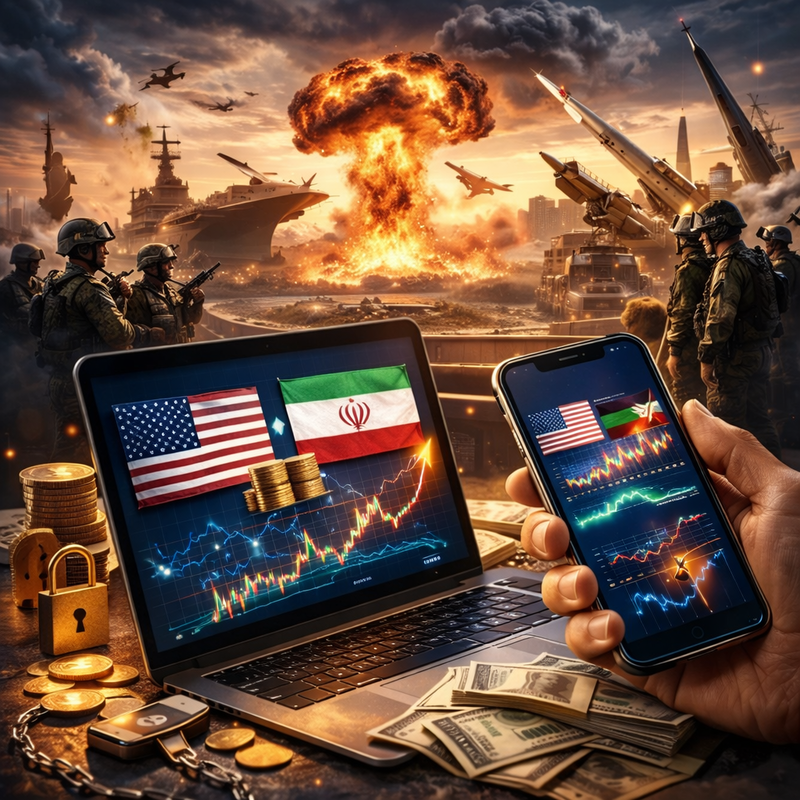
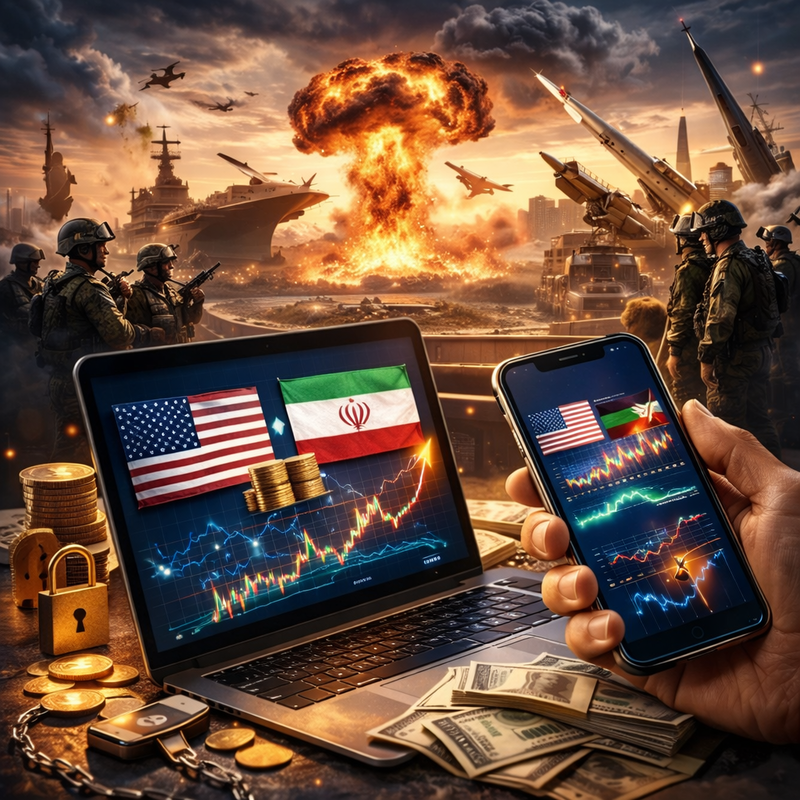
 ▲ U.S., Iran, prediction market/ChatGPT-generated image |
As military tensions escalate between the United States and Iran, a large bet placed on the prediction market Polymarket has proven accurate, raising suspicions of insider trading.
According to cryptocurrency-focused media outlet Cointelegraph on March 1 (local time), Polymarket users wagered more than $1 million on whether the United States would attack Iran. Controversy has intensified after evidence emerged that certain accounts injected substantial funds immediately before news of the attack broke, prompting speculation that they may have obtained advance information.
The accounts at the center of the controversy reportedly mobilized large sums in a market typically dominated by small bets, reaping significant profits. On-chain data confirmed that specific wallets placed concentrated bets on the likelihood of an attack at a time when geopolitical tensions were at their peak. Experts suspect this to be a classic case of exploiting insider information and have raised concerns about the fairness of prediction markets.
While prediction markets such as Polymarket can serve a positive function by forecasting future events through collective intelligence, incidents like this highlight the risk that a small group with prior knowledge of political or military developments could distort the market. Betting conducted using virtual assets such as Bitcoin (BTC) and Ethereum (ETH) also poses tracking challenges due to the anonymity they provide.
Investigative authorities, including the Federal Bureau of Investigation (FBI), have not ruled out the possibility that actual government officials or intelligence sources may have been involved behind the scenes of these large-scale bets. As prediction markets are recognized as tools for enhancing the accuracy of real-time information, concerns persist that they could simultaneously devolve into platforms for illicit information trading.
Polymarket stated that it would strengthen monitoring measures to prevent market manipulation, but many believe there are inherent limits to completely blocking insider trading. Institutional improvements to ensure a transparent trading environment are urgently needed, and market participants must remain cautious of losses arising from information asymmetry. This incident is expected to stand as a stark example of the ethical shortcomings and regulatory challenges facing prediction markets.
Disclaimer: This article is for investment reference only, and no responsibility is assumed for any losses incurred based on it. The content should be interpreted for informational purposes only.