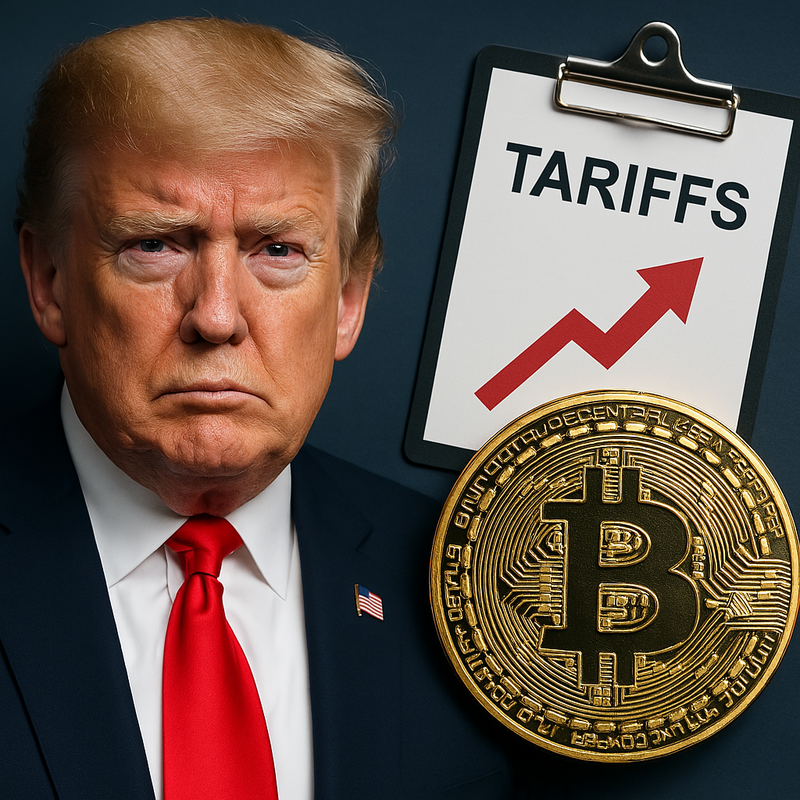
 ▲ Trump, Tariffs, Bitcoin/ChatGPT-Generated Image |
Bitcoin (BTC) is demonstrating the market’s resilience by defending the $65,000 to $66,000 support range despite geopolitical tensions and tariff threats. Rather than reacting to short-term news, investors appear to be focusing on trends in global liquidity supply to gauge the asset’s direction.
According to crypto-focused media outlet CoinGape on February 23 (local time), Bitcoin has maintained a solid trajectory despite concerns over a potential trade war sparked by the Donald Trump administration’s global tariff policies. The imposition of an additional 10% tariff, enforced despite a Supreme Court ruling deeming it unconstitutional, has heightened uncertainty in the global economy. However, sentiment in the crypto market suggests that investors interpret the move as a signal of weakening fiat currency value. Market experts analyze that the power of liquidity injected into the market is playing a greater role in forming price support than macroeconomic downside pressures.
The expansion of global money supply (M2) and liquidity provisioning policies by major central banks serve as key drivers supporting Bitcoin’s price. During past geopolitical crises, Bitcoin has tended to attract buying interest as an alternative asset to the traditional financial system. The recent price defense is interpreted as a result of institutional investors absorbing supply during downturns, thereby reinforcing downside rigidity in the market. Experts note that liquidity indicators continue to trend upward, maintaining a bullish outlook from a macro perspective.
From a technical analysis standpoint, the $65,000 to $66,000 range represents a critical psychological support zone where buying and selling forces are intensely competing. If Bitcoin successfully stabilizes within this range, it could serve as a foundation for a strong rebound when liquidity-driven market conditions fully emerge. Conversely, if the tariff war triggers a sharp contraction in the real economy and drains liquidity across asset markets, short-term price volatility would be unavoidable. Analysts are paying attention to the fact that Bitcoin currently appears more sensitive to internal supply-demand dynamics than to external political variables.
The cryptocurrency ecosystem is once again proving its resilience as an institutional-grade asset by defending this support level. Even in an environment dominated by geopolitical risks, Bitcoin is maintaining its value by adhering to the fundamental indicator of liquidity. Investors are building mid- to long-term positions while closely monitoring the speed and scale at which global liquidity flows into the digital asset market, rather than focusing solely on the disappearance of short-term negative factors.
Disclaimer: This article is for investment reference only and the publisher assumes no responsibility for any investment losses incurred based on it. The content should be interpreted for informational purposes only.