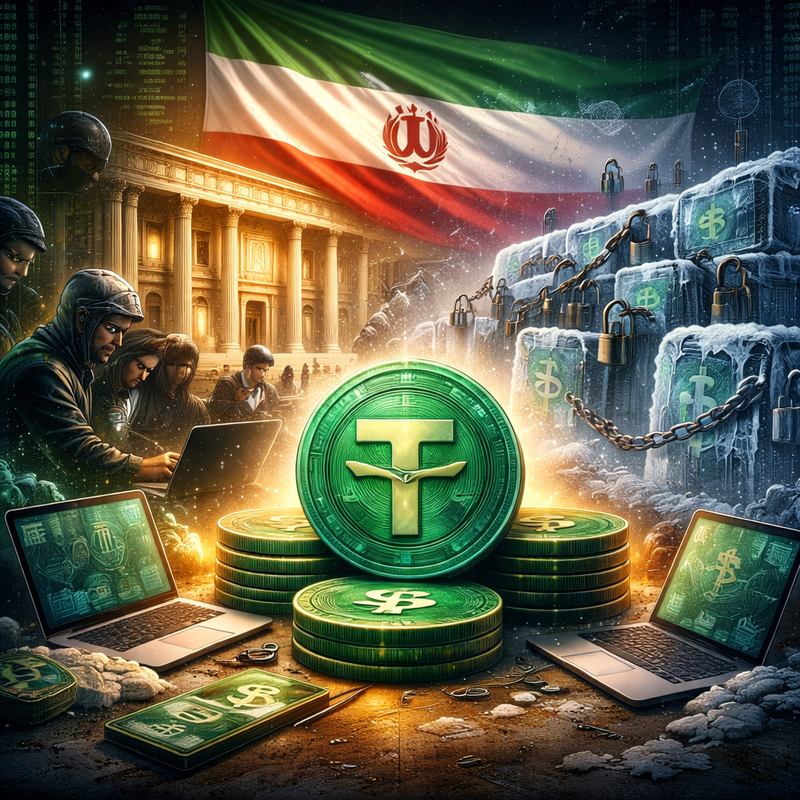
 ▲ Iran, Tether (USDT) / ChatGPT-generated image |
A stablecoin that has survived even amid a battlefield raining bombs has emerged as a crucial tool in neutralizing international sanctions, serving as a practical lifeline for Iran’s economy.
According to a March 3 report by cryptocurrency-focused outlet BeInCrypto, Iran’s local crypto networks have continued operating without interruption following airstrikes led by the administration of U.S. President Donald Trump, providing essential financial channels for both residents and officials. Although President Trump sought to isolate Iran through a combination of military strikes and economic pressure, digital assets have established a foundation for economic survival beyond physical borders and traditional financial sanctions. Even in the flames of war, stablecoins have enabled fast and reliable fund transfers, once again demonstrating their utility in times of national crisis.
Iran’s case clearly illustrates the paradoxical value of dollar-pegged stablecoins. The very technology that allows transactions to retain the value of the U.S. dollar anywhere in the world is simultaneously challenging dollar hegemony by creating pathways to evade sanctions. Reuters reported that the U.S. Treasury had been closely investigating, even a month before the airstrikes began, whether cryptocurrency platforms had assisted Iranian officials in circumventing sanctions. USDT and USDC are currently serving as financial arteries within Iran, defending against severe inflation while facilitating the inflow of overseas funds.
The Financial Action Task Force (FATF) and blockchain analytics firm TRM Labs have intensified monitoring efforts to curb Iran’s money laundering and illicit financial activities conducted through digital assets, yet tangible results remain limited. While TRM Labs is meticulously tracking whether crypto platforms have tolerated or supported Iran’s fund movements, it remains extremely challenging to completely block the characteristics of blockchain technology, which cannot be centrally controlled. As regulators debate new policies and oversight frameworks, Iran continues to expand a self-sustaining economic ecosystem outside the international financial system, using digital assets as a strategic tool.
Stablecoins have become a decisive variable enabling Iran’s economy to withstand extreme military conflict and financial isolation, redefining the geopolitical standing of digital assets. The digital financial network that survived amid the flames of war is expected to become a symbolic example of the fundamental limitations traditional economic sanctions may face in future inter-state conflicts. As the U.S. government increases pressure on cryptocurrency companies, tension is rising across the industry, though some argue that such measures are insufficient to halt technological progress.
The crypto industry and regulators are analyzing the long-term impact of this situation on the global financial order while simultaneously exploring technical improvements and institutional responses. The formidable resilience of digital assets confirmed on the ground in Iran is expected to become a milestone that fundamentally reshapes the role of digital assets in future international conflicts.
Disclaimer: This article is for investment reference only and the publisher is not responsible for any investment losses incurred based on it. The content should be interpreted solely for informational purposes.