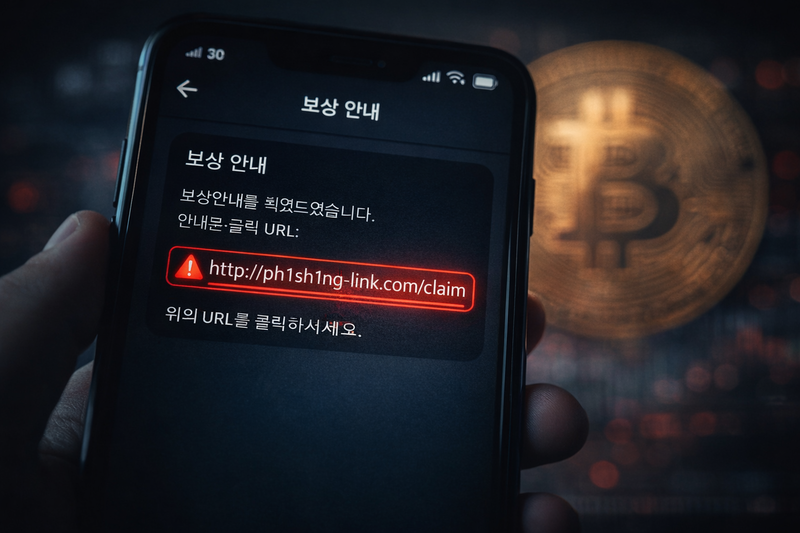
 ▲ From Erroneous Payouts to Smishing… Can Bithumb Protect User Trust?/ChatGPT-generated image |
Bithumb, which has been working to resolve an erroneous payout incident, is now facing a secondary risk in the form of “compensation-impersonation smishing.”
The exchange warned users that phishing messages impersonating compensation notices are being circulated in connection with the Bitcoin (BTC) random box overpayment incident that occurred on the 6th. According to the company, official compensation text messages do not contain URL links, and any message including a link should be regarded as smishing.
It emphasized that all compensation-related guidance is provided only through its customer service center (1661-5566) and that it does not request personal information such as IDs, passwords, security passwords, or ARS authentication codes. The company also stated that it does not send messages or emails with attachments and will never ask customers to transfer virtual assets under any circumstances.
However, some in the industry point out that the situation goes beyond a simple smishing alert and raises questions about potential gaps in user trust management during the incident response process. As the erroneous payout itself has already cast doubts on security and operational controls, the emergence of phishing attempts exploiting the incident has further heightened user anxiety.
Bithumb advised users not to click on any URLs related to compensation, to be cautious of messages containing keywords such as “compensation” or “damage inquiry,” and to verify suspected smishing attempts through the “Protect Nara Service.” If malicious apps have already been installed or financial losses have occurred, users are instructed to immediately report the case to 112 and request a payment suspension.
An official stated, “We have identified smishing attempts exploiting the incident,” and urged users not to click on URLs from unknown sources. Meanwhile, the market is calling for a comprehensive review of user protection systems and more proactive measures following the incident. Attention is focused on whether concrete steps will follow to prevent recurrence and restore trust beyond issuing simple warnings.
Disclaimer: This article is for investment reference only and we are not responsible for any investment losses arising from it. The content should be interpreted for informational purposes only.