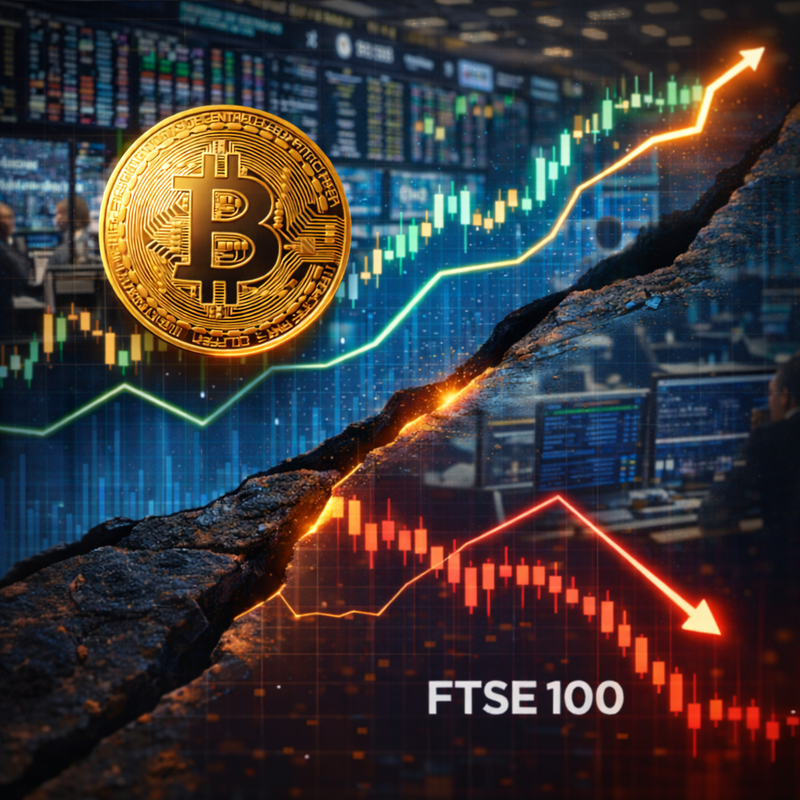
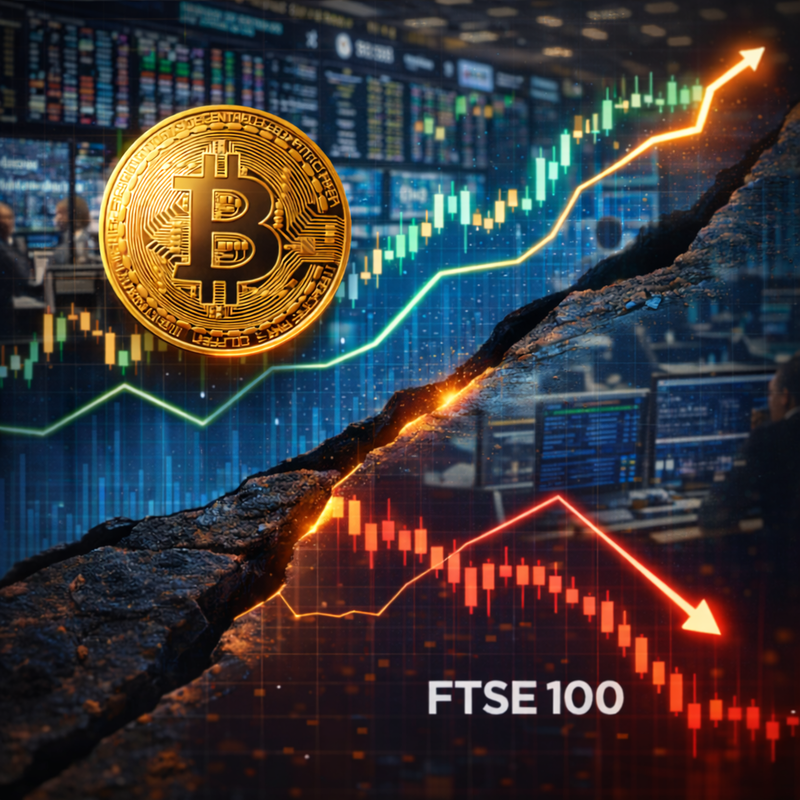
 ▲ Bitcoin (BTC), FTSE 100/AI-generated image |
Bitcoin (BTC) has completely broken its correlation with the UK’s benchmark FTSE 100 index, charting an independent upward trajectory and proving its value as true digital gold.
According to cryptocurrency media outlet CryptoNews on March 10 (local time), Bitcoin has recently moved in the opposite direction of the sharply declining FTSE 100, showing a decoupling phenomenon in which asset correlations have rapidly weakened. As traditional financial markets are shaken by overlapping geopolitical uncertainties and macroeconomic headwinds, Bitcoin’s independent performance is emerging as a compelling alternative for asset allocation. Experts assess that Bitcoin has reached a critical inflection point where it is beginning to take on characteristics of a safe-haven asset beyond that of a risk asset.
Even as the FTSE 100 remains in a prolonged slump amid fluctuations in energy prices and deepening inflation concerns, Bitcoin has maintained upward pressure while establishing solid support levels. Data from on-chain analytics firm Santiment shows that the correlation coefficient between Bitcoin and the stock market has fallen to its lowest level in recent months. This suggests that the virtual asset market is no longer a mere appendage of the equity market but is evolving into a mature market driven by its own supply and demand dynamics.
Behind this shift is a steady influx of institutional investors and stable capital inflows through spot Bitcoin ETFs. In particular, accelerating regulatory progress, including advancements in the U.S. crypto market structure bill (CLARITY), has made it more evident that traditional financial capital is choosing Bitcoin as an alternative to equities. Major companies, including Strategy, continue to increase their Bitcoin holdings, further reinforcing the asset’s downside resilience.
Officials in the UK financial sector noted, “At a time when traditional portfolio theory is being challenged, Bitcoin’s independent returns present an irresistible and attractive investment opportunity for institutions.” Bitcoin has previously demonstrated faster recovery resilience than the stock market during economic crises, and this decoupling from the FTSE 100 is viewed as part of a process in which the asset’s intrinsic value is being reassessed. Market participants are closely watching whether Bitcoin’s independent trajectory will remain temporary or solidify into a long-term trend.
Bitcoin’s strength is also positively influencing major cryptocurrencies such as XRP and Solana, improving overall sentiment across the virtual asset market. Bitcoin is currently absorbing global liquidity flows while widening the gap with traditional financial indices. Investors are advised to focus on Bitcoin’s own technical indicators and on-chain trends rather than being swayed by stock market volatility, and to establish long-term asset management strategies accordingly.
Disclaimer: This article is for investment reference only and we are not responsible for any investment losses based on it. The content should be interpreted for informational purposes only.