 ▲ |
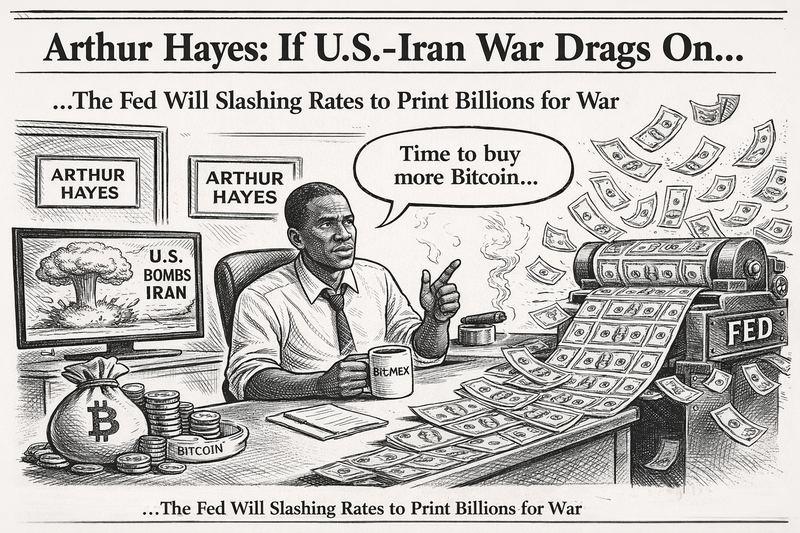
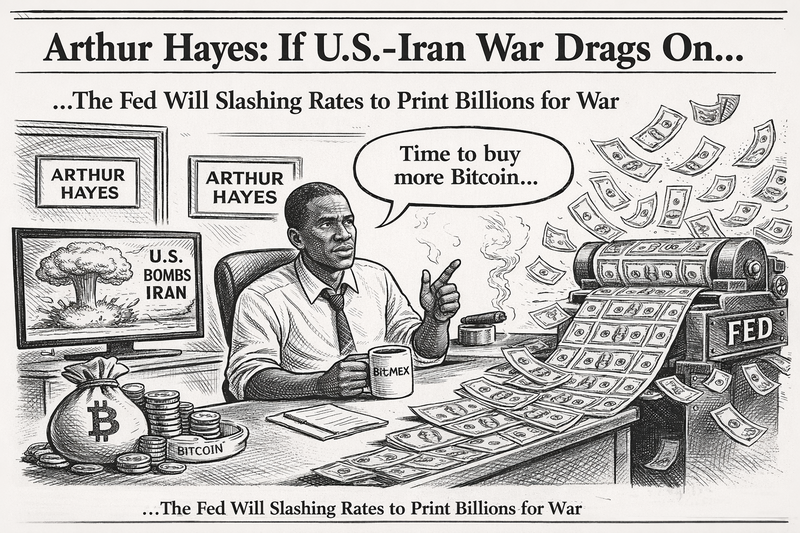
Arthur Hayes, co-founder of BitMEX, said on his blog that if a U.S. military attack on Iran becomes prolonged, the costs associated with the war, including reconstruction, would increase. To bear these expenses, the Federal Reserve is more likely to lower its benchmark interest rate and expand the money supply.
He noted that immediately after the outbreak of the Gulf War in 1990, the Fed cut interest rates consecutively. Likewise, following the September 11 attacks in 2001, when the United States declared a “Global War on Terror” and entered into conflict in the Middle East, the Fed promptly resorted to rate cuts as financial market instability spread. Hayes added that President Donald Trump’s political fate and the November midterm elections depend on financial market trends and movements in oil prices. Since regime change in Iran has been a shared objective of both Republicans and Democrats, the Fed has political justification for easing monetary policy. In the process of securing funds to bring Iran into the U.S. sphere of influence, the Fed could play a role by supplying liquidity. However, it remains uncertain how much funding Trump is willing to commit to intervention in Iran. Hayes assessed that the period immediately after the Fed cuts rates or injects liquidity would present a buying opportunity for cryptocurrencies.
Disclaimer: This article is for investment reference only and the publisher is not responsible for any investment losses incurred based on it. The content should be interpreted solely for informational purposes.